
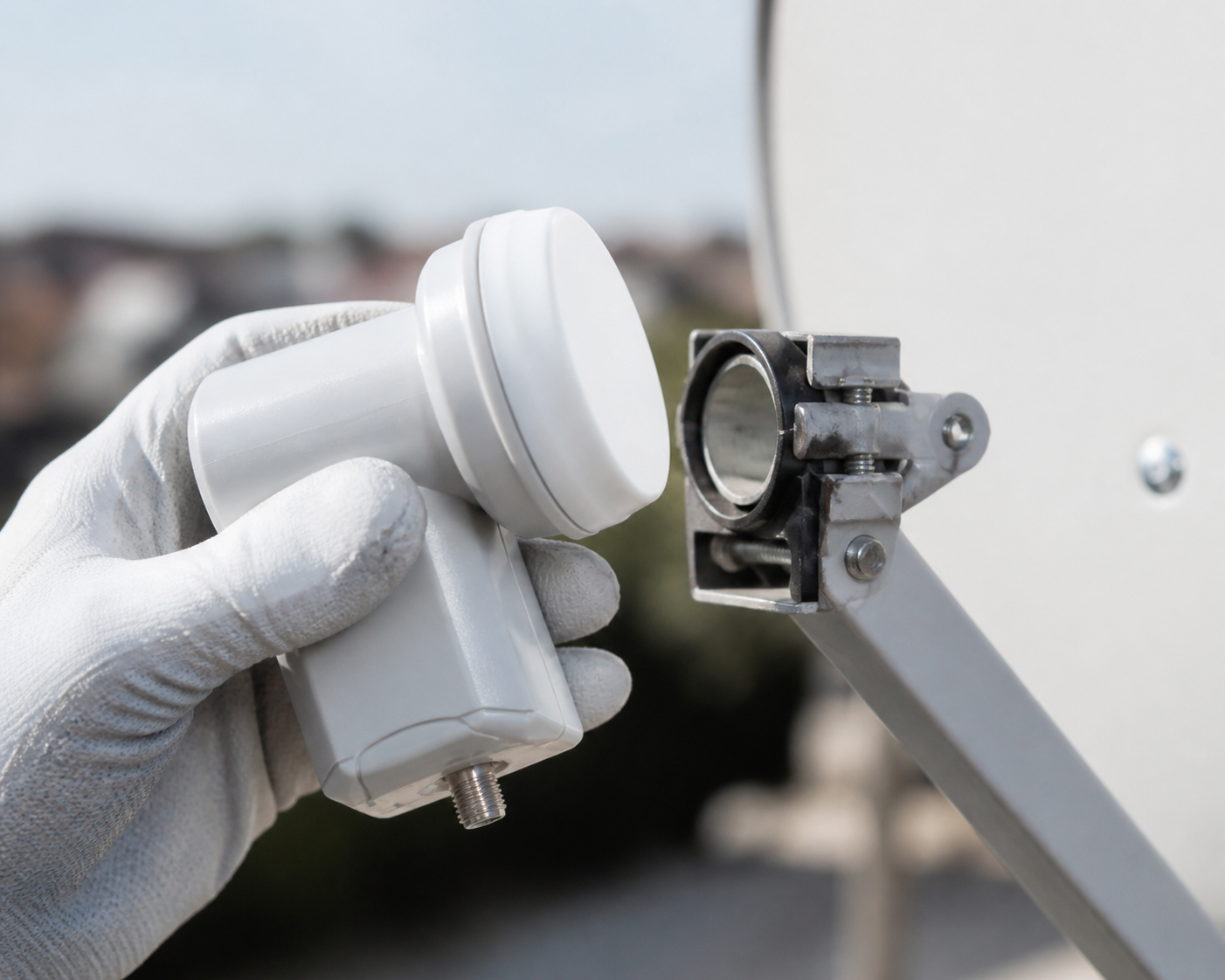
DStv LNB replacement is one of the most common fixes for satellite signal problems. The LNB (Low-Noise Block) is the small component at the front of your satellite dish that actually receives the signal and sends it down the cable to your decoder. When it fails, you’ll typically see intermittent signal loss, complete “no signal” errors, or specific fault codes like E48-32 that don’t clear no matter how many times you reset the decoder.
Signs You Need an LNB Replacement
Intermittent signal that gets worse in bad weather, a total loss of signal on all connected decoders, or a decoder showing E48-32 repeatedly are the classic signs of a failing LNB — usually caused by age, water ingress, or storm damage.
What’s Included in Our DStv LNB Replacement Service
TV Signal diagnoses LNB faults on-site using proper signal-strength meters, not guesswork, and carries replacement single, twin, and quad LNBs to suit single or multi-decoder households. We also check and reseal the LNB mounting and cable connections against weather, since a poorly sealed connection is one of the most common causes of LNBs failing again within a year.
Why Choose TV Signal for DStv LNB Replacement
A replacement is usually a quick job once we’ve confirmed the LNB — rather than the dish alignment, cabling, or decoder — is the actual fault, so we test each component in order rather than swapping parts blindly.
Signs the LNB Isn’t the Only Problem
Occasionally a household replaces the LNB and still sees intermittent issues — usually because ageing cabling or a failing multiswitch is the real underlying cause and the LNB was simply the most visibly worn part. We test the full signal chain during a replacement, not just the LNB in isolation, so you’re not paying for a repeat callout a few months later.
We stock LNBs on our service vehicles specifically so a confirmed LNB fault can usually be fixed in the same callout, without waiting on a parts order. That matters most when the fault has knocked out signal to every decoder in the house.
Every LNB we fit is covered by a workmanship guarantee, and we log the replacement date so it’s easy to track when a unit might be due for a check in a few years.
A proper DStv LNB replacement, done correctly the first time, is usually cheaper in the long run than repeated call-outs for a patched-up fix.
Related DStv Services
- DStv Repairs & Troubleshooting
- DStv Satellite Dish Installation
- How to Clear E48-32 on a DStv Decoder
Not sure which service you need, or want a free quote? Contact TV Signal or call 079 754 5527.
Preventing Future LNB Failures
Most LNB failures we see on callouts trace back to poor weatherproofing rather than the component simply wearing out — rainwater finds its way into an unsealed connector and slowly corrodes the internals over months. That’s why every replacement we do includes properly resealing the connection point, not just swapping the part and leaving.
If your LNB has failed more than once at the same property, it’s usually worth having us check the mounting position and cable routing too, since repeated failures often point to a drainage or exposure issue rather than bad luck with parts.
Frequently Asked Questions About DStv LNB Replacement
How do I know if it’s the LNB and not the decoder?
A decoder fault usually affects one TV; an LNB fault usually affects every decoder connected to that dish at once. We confirm with a signal-strength test at the dish itself.
How long does an LNB last?
A quality LNB typically lasts several years, but coastal salt air and unsealed connections can shorten that significantly — which is why we reseal every connection we replace.
Can a faulty LNB cause the E48-32 error?
Yes, a failing or water-damaged LNB is one of the most common causes of a persistent E48-32 error that won’t clear with a decoder reset.
Do you carry LNBs for multi-decoder households?
Yes, we carry single, twin, and quad LNBs on our vehicles for same-visit replacement in most cases.